The PC-Doctor Blog

Erasing an OPAL Drive Without the Key: What PSID Revert Does

Erasing an OPAL Drive Without the Key: What PSID Revert Does

Last technical review: September 29, 2026 by PC-Doctor Engineering

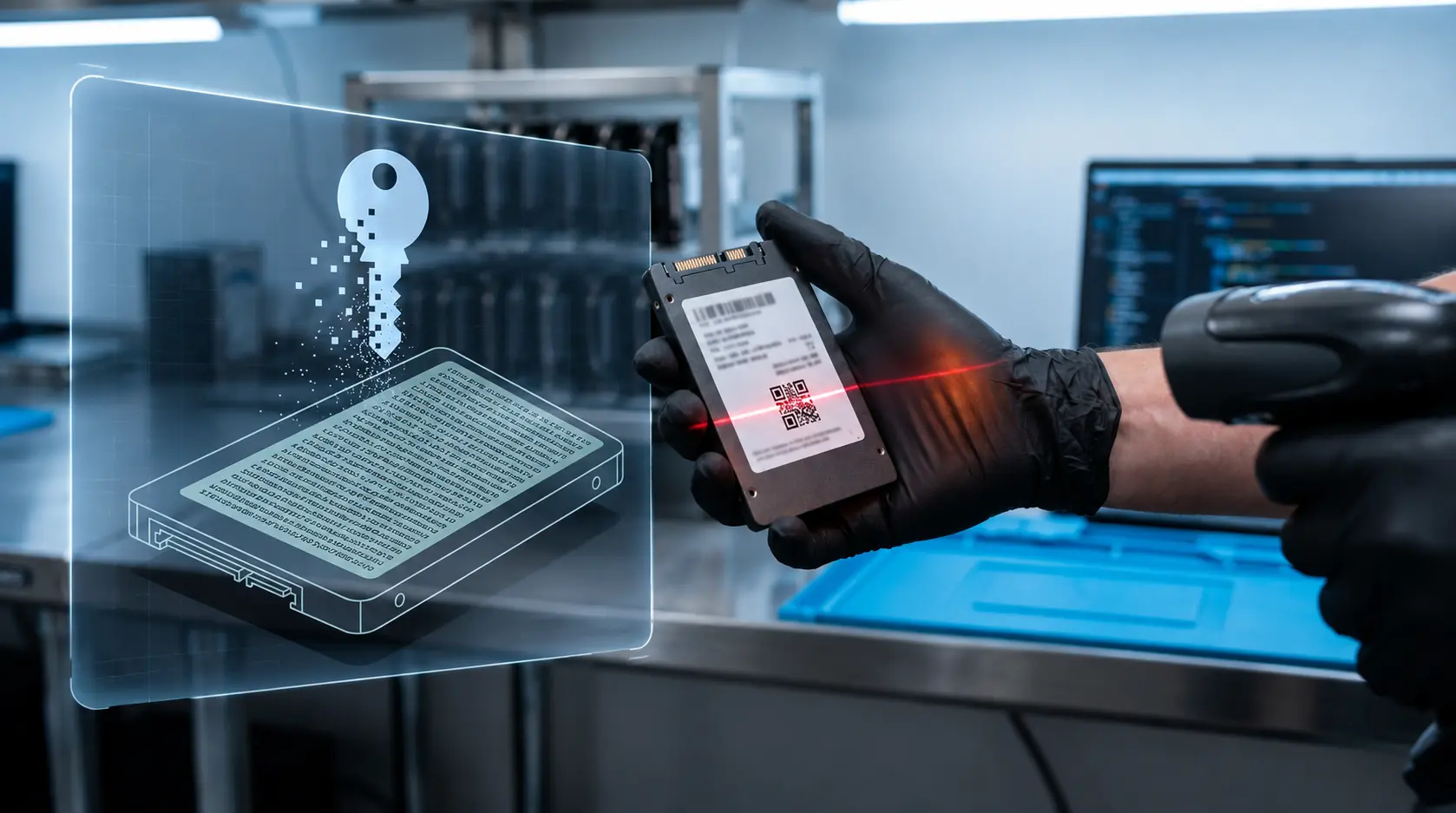
A PSID revert erases a TCG Opal self-encrypting drive without the owner’s credentials. The 32-character Physical Security ID printed on the drive’s label authorizes a Revert command that destroys the media encryption key and returns the drive to its manufacturing state. Every block becomes unreadable, the drive unlocks, and it can be reimaged and reused. The operator needs physical possession of the drive and nothing else.

That last clause is the whole security model, and it is worth understanding before relying on it.
Read more

Wipe, Degauss, or Shred: When a Drive Has to Be Physically Destroyed

Wipe, Degauss, or Shred: When a Drive Has to Be Physically Destroyed

Last technical review: September 29, 2026 by PC-Doctor Engineering

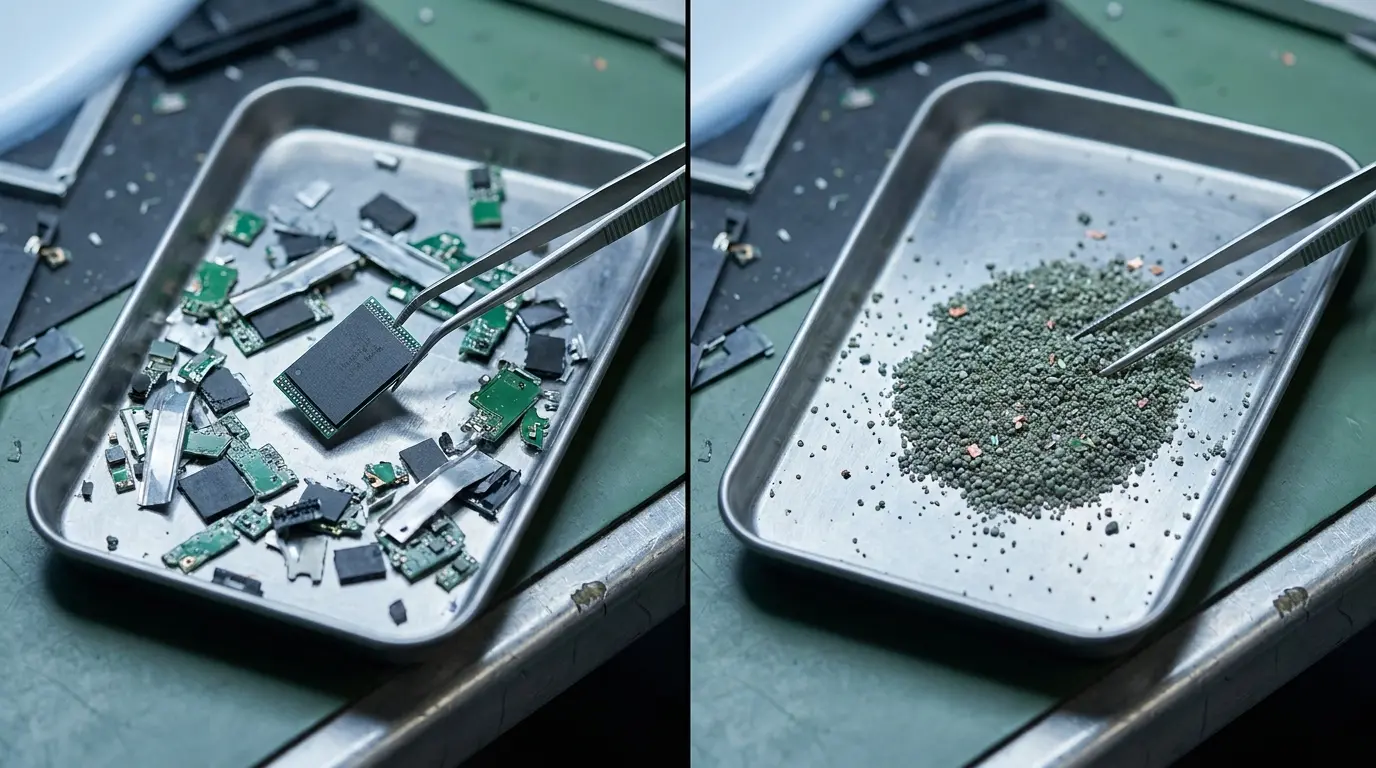
Physical destruction is required when policy demands it, when the drive can’t complete a verified erase, or when the media can’t reach the sanitization level the data requires. Otherwise, a verified Purge lets the drive be reused or resold. Degaussing only works on magnetic drives. Shredding works on everything. Wiping works on both, if the drive supports the right commands and the policy accepts the result.

That paragraph is the whole decision. Most operations don’t make it. They destroy by default, because destruction feels safe, or they wipe by default, because wiping preserves value. Both defaults are wrong for some fraction of every batch.

Read more

R2v3, ADISA, and NAID AAA: What Each Certification Requires of Your Erasure Process

R2v3, ADISA, and NAID AAA: What Each Certification Requires of Your Erasure Process

Last technical review: September 29, 2026 by PC-Doctor Engineering

R2v3, ADISA, and NAID AAA all require documented data sanitization, and they all ask for different things. R2v3 sets a recoverability threshold and requires independent verification sampling.[1] ADISA audits the technical efficacy of the erase, on site, with forensic tools.[2][3] NAID AAA audits the people, the access controls, and the chain of custody around the erase, and leaves the technique to the operator’s policy.[4]

Most operations learn those differences during an audit. The better time is before one.

Read more

What a Certificate of Erasure Must Contain to Survive an Audit

What a Certificate of Erasure Must Contain to Survive an Audit

Last technical review: September 29, 2026 by PC-Doctor Engineering

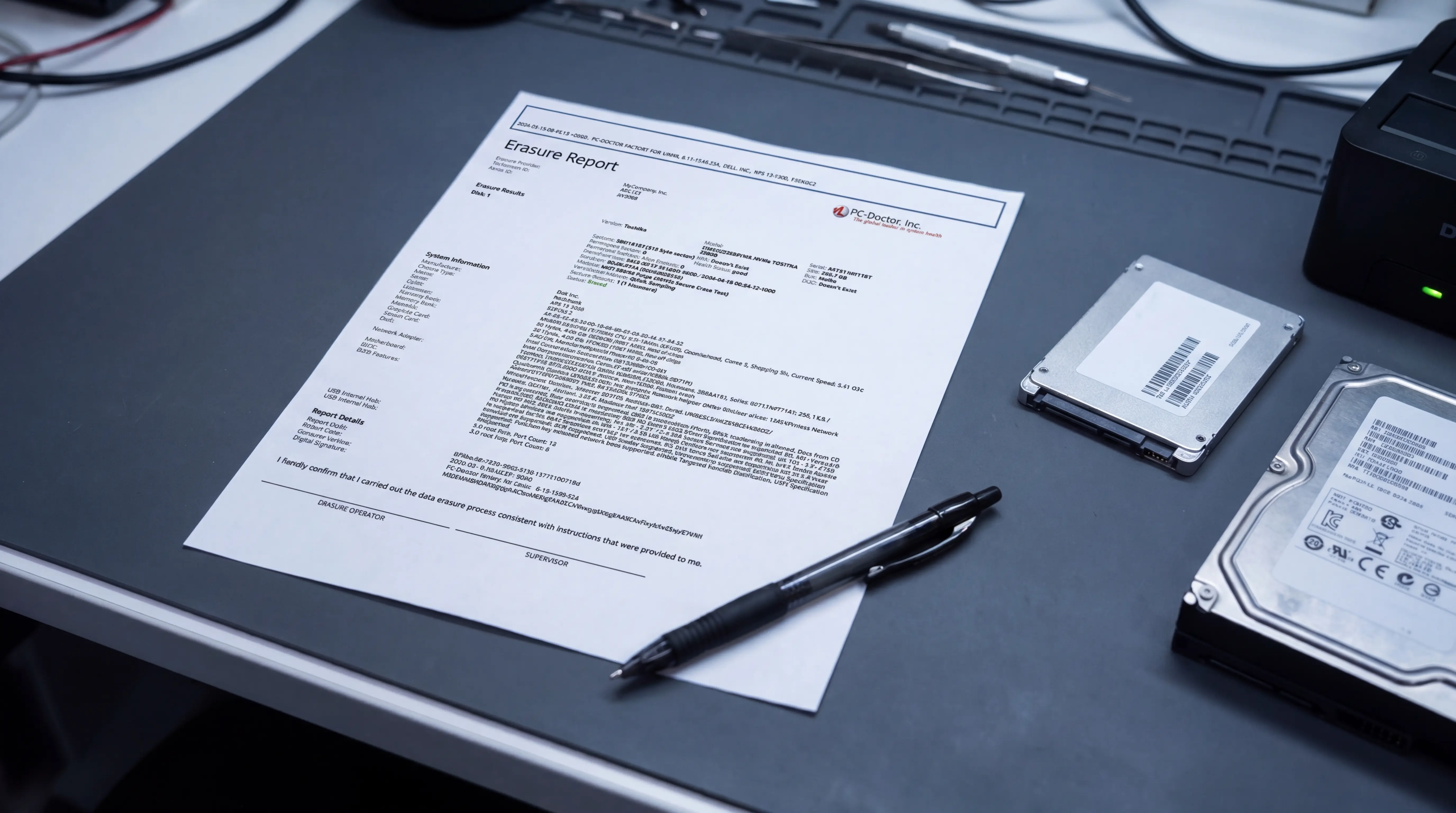
Most drive erase certificates are generated automatically, filed automatically, and never read by anyone until the day they matter.

That day is an audit, a customer dispute, or a data incident. And on that day the certificate is either evidence or it is a PDF with a green checkmark on it.

The difference is what's on the page.

Read more

Clear, Purge, Destroy: How NIST 800-88 and IEEE 2883 Define Sanitization

Clear, Purge, Destroy: How NIST 800-88 and IEEE 2883 Define Sanitization

Last technical review: September 16, 2026 by PC-Doctor Engineering

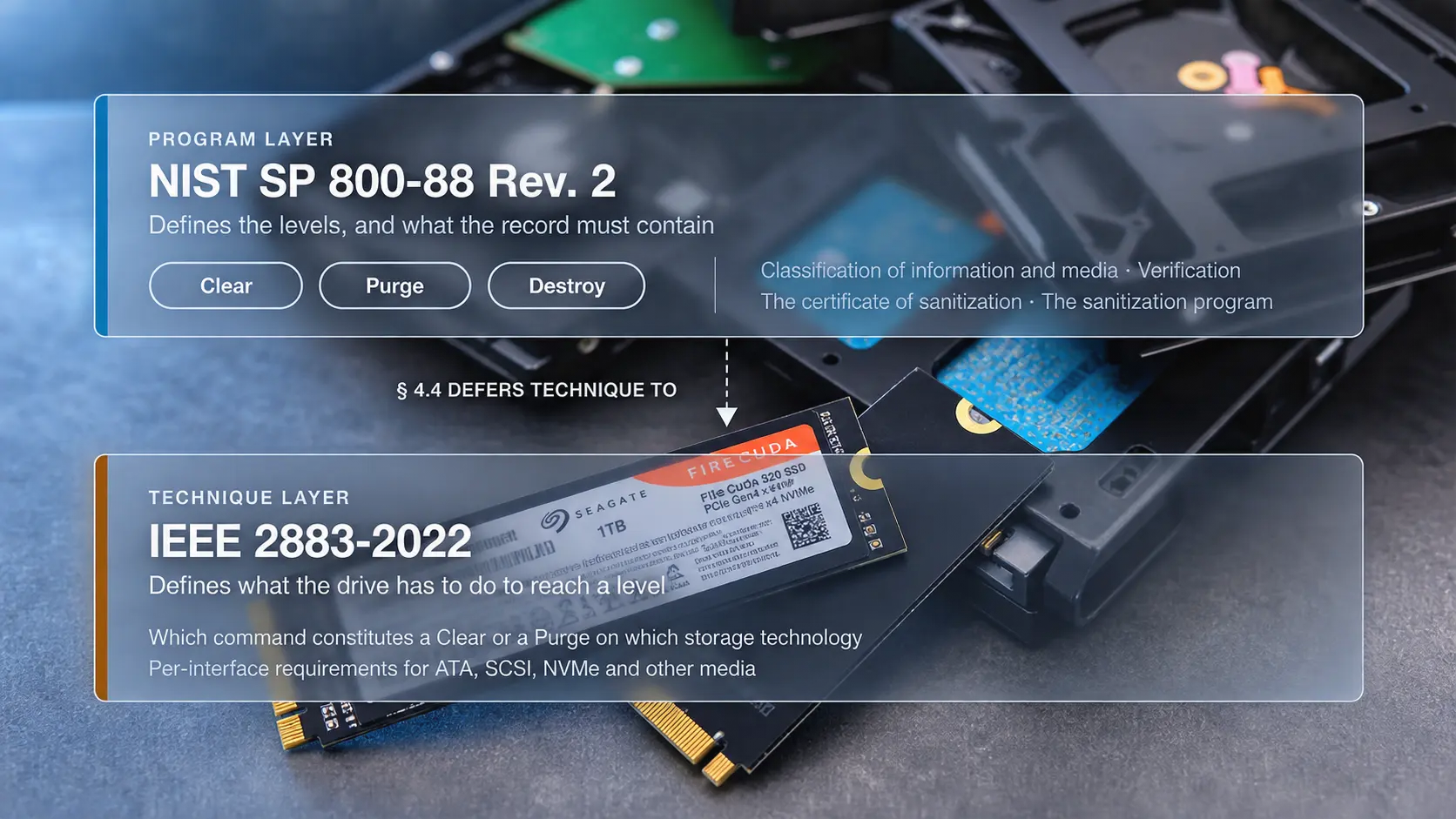
Clear, Purge, and Destroy are the three sanitization levels defined in NIST SP 800-88. Clear removes data from every user-addressable location and defeats simple recovery. Purge makes recovery infeasible even with laboratory techniques. Destroy does the same and leaves the media unusable afterward. Since Revision 2 of the NIST guideline, published in September 2025, NIST defines the levels and IEEE 2883-2022 defines the techniques that reach them.[1][5]

That last sentence is where most explanations of these standards go wrong, because it was not true until recently. For eleven years the two documents overlapped, and it was reasonable to ask which one applied. It is no longer the right question. The two standards now occupy different layers, and a sanitization program needs both.

Read more