The PC-Doctor Blog

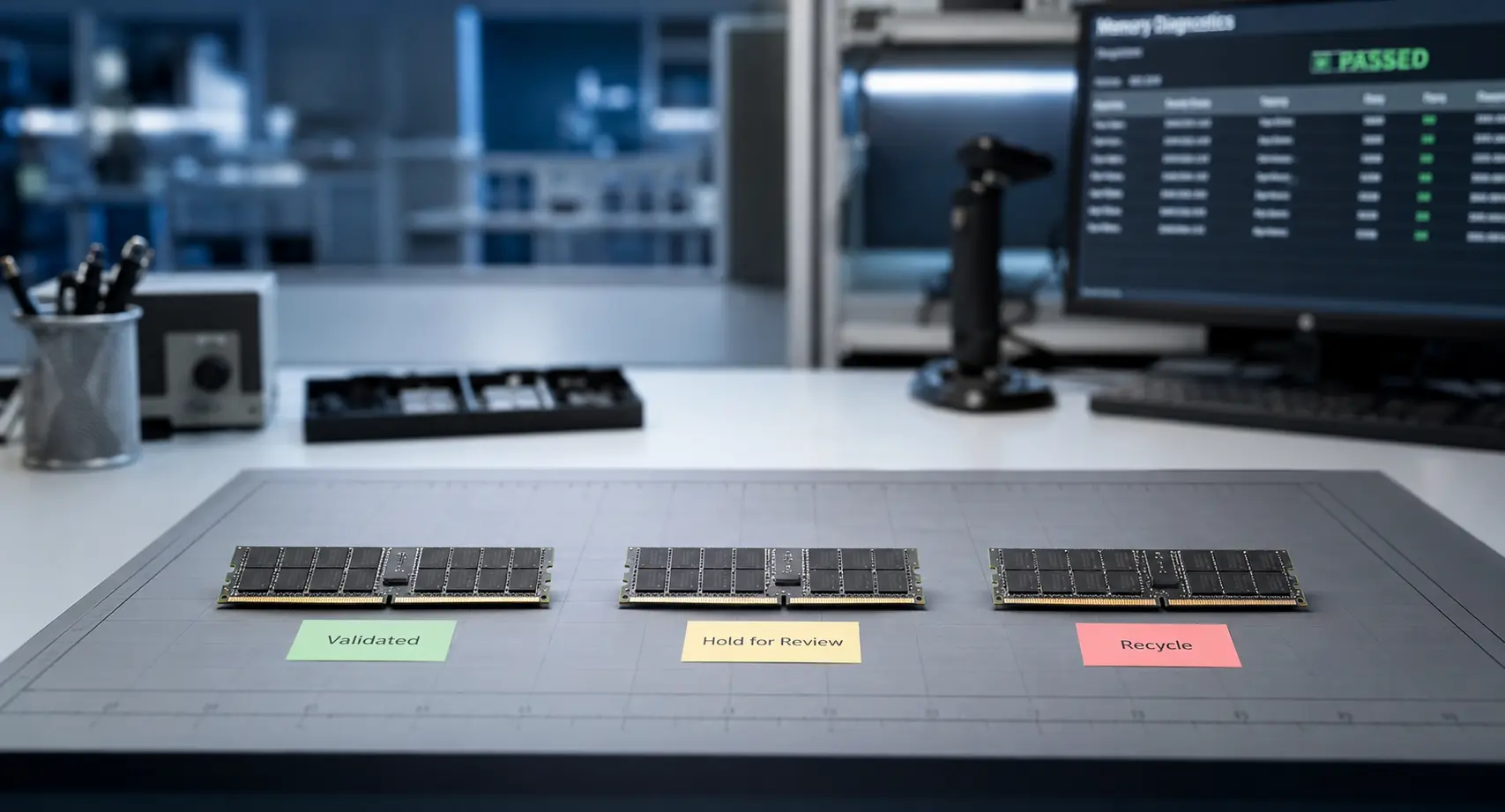
Recovered Isn't Ready: When a Used Part Earns Its Way Back In

Recovered Isn't Ready: When a Used Part Earns Its Way Back In

A follow-up to "Premium Prices Demand Premium Refurbished PCs"

Last technical review: July 16, 2026 by PC-Doctor Engineering

IBM just put a public number on something refurbishers have been feeling for months.

In the last weeks of June, IBM's clients yanked their capex toward servers, storage, and memory... buying early to lock in supply before prices climbed again. It hit IBM's own results hard enough that the CEO wrote a letter about it.1

Read more

Certified Drive Erase vs "Good Enough": What’s at Risk

Certified Drive Erase vs "Good Enough": What’s at Risk

Last technical review: September 21, 2026 by PC-Doctor Engineering

Most teams believe they are erasing data.

They run a quick format. Maybe a wipe utility. Maybe a multi-pass overwrite. Then they move on, because it feels like enough.

But "good enough" is not a sanitization level. NIST defines three — Clear, Purge, and Destroy — and each one is a statement about what an attacker can no longer recover, not about how hard the operator tried.[1] A process that cannot say which level it reached, on which drive, under which standard, has not sanitized anything. It has run a command and hoped.

The difference between informal wiping and a certified drive erase is not technical nuance. It is the difference between a claim and evidence.

Read more

What a Defensible Repair Process Actually Looks Like

What a Defensible Repair Process Actually Looks Like

Most repair and device processing operations focus on one thing: Fixing the problem.

But in high-volume environments, that’s not enough. Because it’s not just about whether a device works, it’s about whether you can prove it works.

And that’s where most operations fall short.

Read more

How to Standardize Hardware Testing Across Your Operation

How to Standardize Hardware Testing Across Your Operation

Most repair and device processing operations think they have a testing process. In reality, they have a collection of individual habits.

One technician runs a quick check.
Another runs a full test suite.
A third relies on experience and intuition.

And the result?

Inconsistent outcomes.
Missed issues.
Repeat returns.

If you’re seeing no-fault-found returns, rework, or unpredictable turnaround times, the problem usually isn’t your technicians. It’s your lack of standardization.

Read more

Why No-Fault-Found Returns Are Killing Your Margins

Why No-Fault-Found Returns Are Killing Your Margins

No-fault-found (NFF) returns are one of the most expensive, and least controlled, problems in high-volume repair and device processing operations.

A device comes in with a reported issue.
It gets tested.
Nothing is found.
It gets returned.

And then it comes back again.

Multiply that across hundreds or thousands of devices, and you’re not just dealing with inconvenience, you’re bleeding margin.

Read more

Page 1 of 3