The PC-Doctor Blog

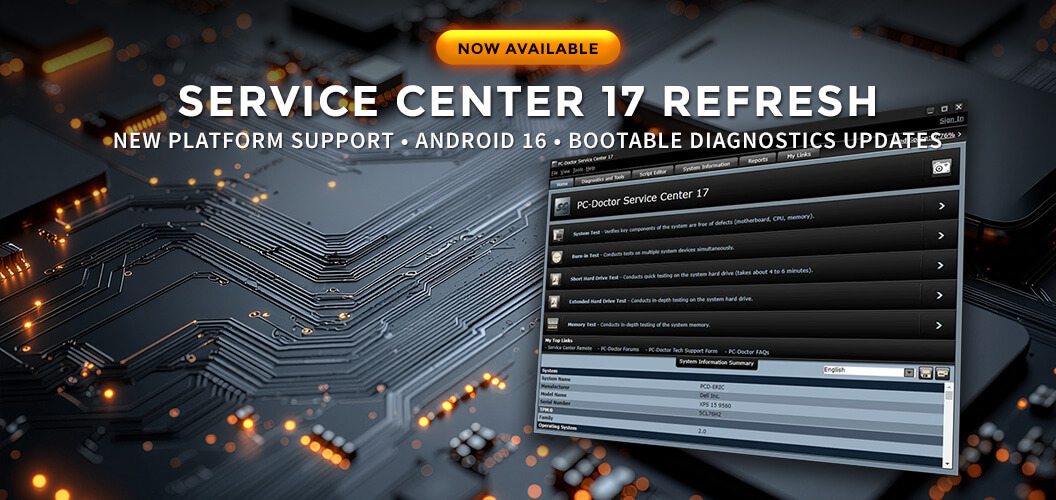
Service Center 17 Refresh Release: Android 16 Support, Expanded Platform Compatibility, and Important Secure Boot Updates

Service Center 17 Refresh Release: Android 16 Support, Expanded Platform Compatibility, and Important Secure Boot Updates

At PC-Doctor, maintaining compatibility with evolving hardware platforms, operating systems, firmware technologies, and security requirements is an ongoing priority.

We're pleased to announce the latest Service Center 17 Refresh release, delivering expanded platform support, diagnostic enhancements, compatibility improvements, and an important update for organizations using Bootable Diagnostics on Secure Boot-enabled systems.
Read more

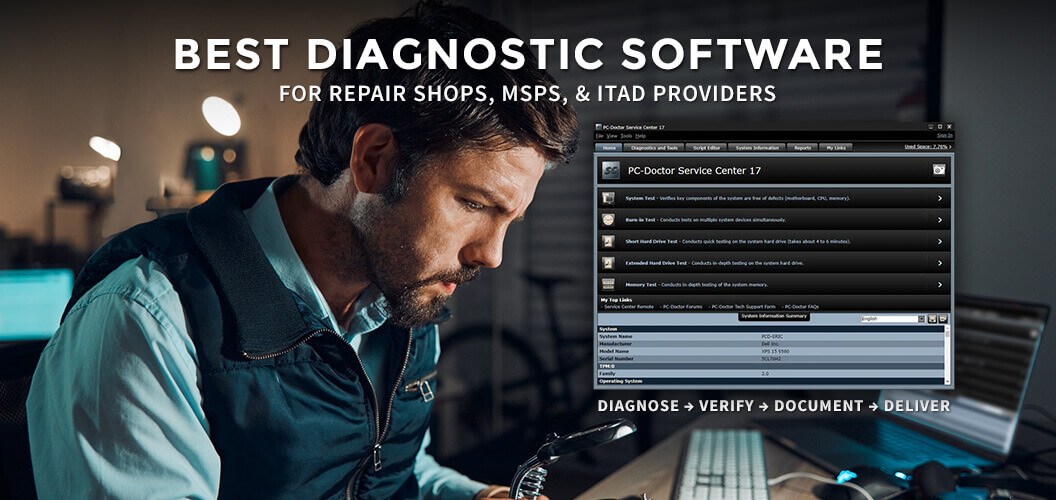
Best Diagnostic Software for Computer Repair Shops

Best Diagnostic Software for Computer Repair Shops

When customers hand over a laptop, desktop, workstation, or mobile device for repair, they expect more than guesswork.

They expect answers. They expect proof.

And, they expect the issue to actually be resolved the first time.

That’s why modern repair operations are moving away from inconsistent technician troubleshooting and toward standardized diagnostic workflows powered by professional hardware testing software.

Read more

Certified Drive Erase vs "Good Enough": What’s at Risk

Certified Drive Erase vs "Good Enough": What’s at Risk

Last technical review: September 21, 2026 by PC-Doctor Engineering

Most teams believe they are erasing data.

They run a quick format. Maybe a wipe utility. Maybe a multi-pass overwrite. Then they move on, because it feels like enough.

But "good enough" is not a sanitization level. NIST defines three — Clear, Purge, and Destroy — and each one is a statement about what an attacker can no longer recover, not about how hard the operator tried.[1] A process that cannot say which level it reached, on which drive, under which standard, has not sanitized anything. It has run a command and hoped.

The difference between informal wiping and a certified drive erase is not technical nuance. It is the difference between a claim and evidence.

Read more

What a Defensible Repair Process Actually Looks Like

What a Defensible Repair Process Actually Looks Like

Most repair and device processing operations focus on one thing: Fixing the problem.

But in high-volume environments, that’s not enough. Because it’s not just about whether a device works, it’s about whether you can prove it works.

And that’s where most operations fall short.

Read more

How to Standardize Hardware Testing Across Your Operation

How to Standardize Hardware Testing Across Your Operation

Most repair and device processing operations think they have a testing process. In reality, they have a collection of individual habits.

One technician runs a quick check.
Another runs a full test suite.
A third relies on experience and intuition.

And the result?

Inconsistent outcomes.
Missed issues.
Repeat returns.

If you’re seeing no-fault-found returns, rework, or unpredictable turnaround times, the problem usually isn’t your technicians. It’s your lack of standardization.

Read more